
MODERN LINES IN TUBULAR STEEL: 100 YEARS OF BAUHAUS INFLUENCE ON THONET


Published by Sugar & Cream, Monday 29 September 2025
Images courtesy of Thonet
From Bauhaus to Today: Thonet’s Tubular Steel Icons Endure
In 1925, when the Bauhaus moved to Dessau, something revolutionary was brewing in the workshops. Designers like Marcel Breuer and Mart Stam began experimenting with tubular steel—a material until then reserved for hospitals, bicycles, and trains. Breuer, inspired by the curve of his bicycle handlebars, was the first to imagine it as furniture for the home.


The result was the B 9 stool, designed for the Bauhaus canteen. Soon it evolved into the B 9 nesting tables, a set of minimalist forms defined by a single bent tube and a wooden panel. Lightweight, space-saving, and radical in its modernity, the B 9 set the tone for what would become a new chapter in design history.
Presented by Magran Living
By the time the Deutscher Werkbund unveiled tubular steel furniture at the 1927 Weissenhof Estate exhibition in Stuttgart, the world took notice. Compared to the heavy wooden furniture of the German Gründerzeit, these pieces were light, airy, and open—embodying what Breuer described as “furniture drawn into the room, obscuring neither movement nor view.”

Thonet quickly recognized the potential. In 1929, the company acquired Breuer’s firm Standard Möbel and began producing his designs, from the B 9 to the iconic S 32/S 64 cantilever chairs. By the 1930s, Thonet had become the largest manufacturer of tubular steel furniture worldwide, a legacy that continues today.

A century later, Thonet still reinterprets these Bauhaus icons for contemporary living. Jil Sander, with her JS . THONET line, brought fashion’s precision and restraint to the S 64 and B 97 tables, experimenting with matte nickel and glossy titanium finishes. Designer Frank Rettenbacher followed with the S 243 chair, a playful blend of tubular steel and colourful plywood that distills Bauhaus principles into a 21st-century form.

Meanwhile, the Bauhaus Dessau Foundation is marking its centenary in 2025 with exhibitions and events celebrating this enduring legacy. What began in a test workshop at an aircraft plant in Dessau has become one of the most recognizable aesthetics in modern design—proof that tubular steel, once deemed “too cold” for the home, reshaped the very idea of how we live with furniture.

 1.27K
10/11/2026
BONALDO NIGHT AREA 2026 WHEN THE BEDROOM TAKES CENTRE STAGE
Night Area 2026 sees Bonaldo bring refined proportions, tactile materials and thoughtful details to the contemporary bedroom, unveiled at Salone del...
read more 523
10/11/2026
A TOUCH OF DIOR MAGIC TO THE GALETTE DES ROIS BY YANNICK ALLÉNO
Yannick Alléno gives the French Galette des Rois a Dior makeover, where buttery layers, caramelised apples and couture-inspired details make for a rather...
read more

 11.43K
20/10/2026
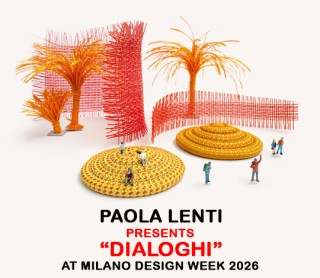
PAOLA LENTI PRESENTS “DIALOGHI” AT MILANO DESIGN WEEK 2026
At Milano Design Week 2026, Paola Lenti’s Dialoghi explores a continuous dialogue between colour, material, and space.
read more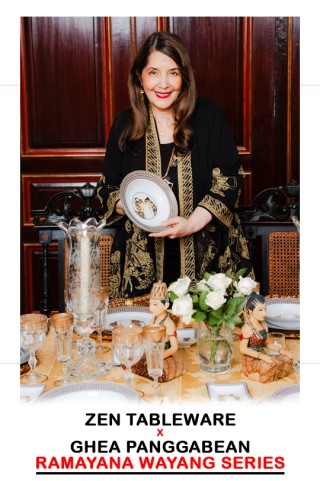 10.73K
06/11/2026
ZEN TABLEWARE X GHEA PANGGABEAN: RAMAYANA WAYANG SERIES
ZEN Tableware and Indonesian fashion designer Ghea Panggabean unveil the Heritage Ramayana Wayang Series, a fine porcelain collection defined by...
read more
 206.58K
11/12/2024
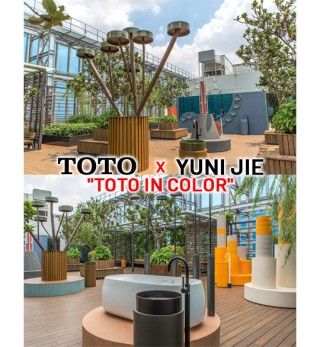
TOTO X YUNI JIE: "TOTO in Color"
TOTO x Yuni Jie launches 'TOTO in Color', featuring an outdoor art installation and a sculpture garden inspired by Indonesia's heritage.
read more 107.50K
10/01/2025
W RESIDENCE IN SOUTH JAKARTA BY MICHAEL CHANDRA
Michael Chandra, founder of MNCO Studio Design has created the W Residence with an aesthetically pleasing, practical, and pleasant home from all...
read more

Related Articles
 3.51K
06/11/2026
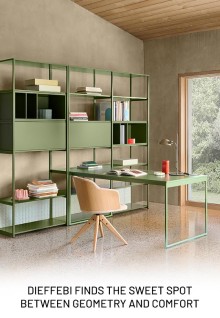
DIEFFEBI FINDS THE SWEET SPOT BETWEEN GEOMETRY AND COMFORT
In Chapter 3 of Home Office Scenarios, Dieffebi explores the balance between modular geometry, adaptable design, and the warmth of everyday living.
read more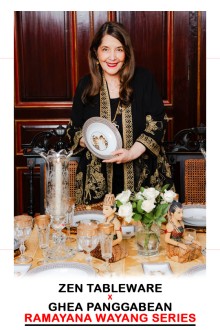 10.73K
06/11/2026
ZEN TABLEWARE X GHEA PANGGABEAN: RAMAYANA WAYANG SERIES
ZEN Tableware and Indonesian fashion designer Ghea Panggabean unveil the Heritage Ramayana Wayang Series, a fine porcelain collection defined by...
read more