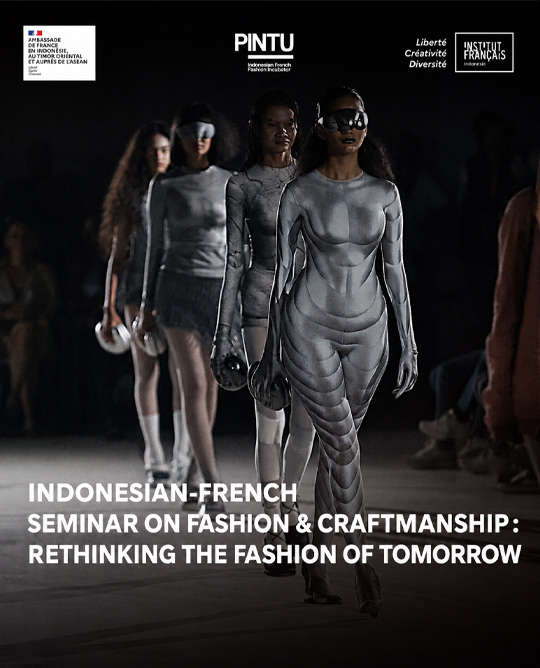

PINTU SEMINAR 2026: RETHINKING THE FASHION OF TOMORROW


Published by Sugar & Cream, Friday 04 September 2026
Images courtesy of IFI & PINTU
A Dialogue on Craftsmanship and Innovation
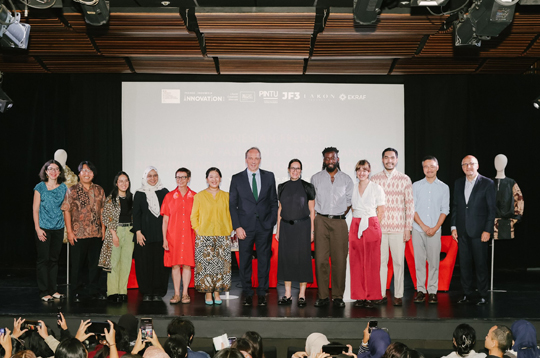
Fashion is shaped not only by what appears on the runway, but also by the conversations that shape its future. As part of PINTU Focus Week 2026, PINTU Seminar 2026: Rethinking the Fashion of Tomorrow brought together designers, educators, researchers, and creative industry leaders from Indonesia and France for a day of dialogue on the opportunities and challenges shaping the future of fashion.
Hosted by Farid Mardhiyanto and moderated by Dino Augusto, the seminar featured two panel discussions exploring the evolving roles of craftsmanship and textile innovation, as well as the ideas and practices needed to move the industry forward.
Slow Fashion vs. Fast Fashion: Can Craftsmanship Win?
Moderated by Dino Augusto, the opening panel featured Thresia Mareta (Founder, LAKON Indonesia), Darja Richter-Widhoff (Head of Design and Co-Director, ENAMOMA-PSL), Fengyuan Dai (Founder, 30%70 Studio), Gabriel Marcella Budiono (PINTU 2026 Resident), and Mickael Nana (Founder, MARLON NANA and PINTU 2026 Resident).
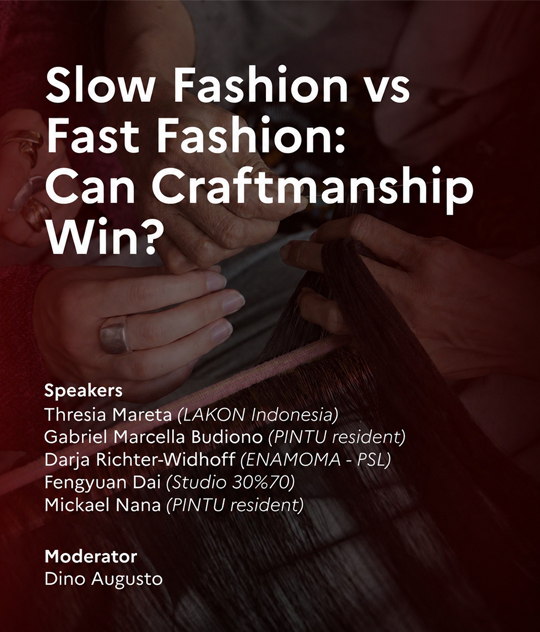
The panel examined how craftsmanship can remain relevant in an industry increasingly shaped by speed, scale, and shifting consumer expectations. Rather than framing slow fashion and fast fashion as opposing forces, the speakers considered craftsmanship as an evolving practice rooted in cultural heritage and artisanal knowledge.
Presented by Interni Cipta Selaras
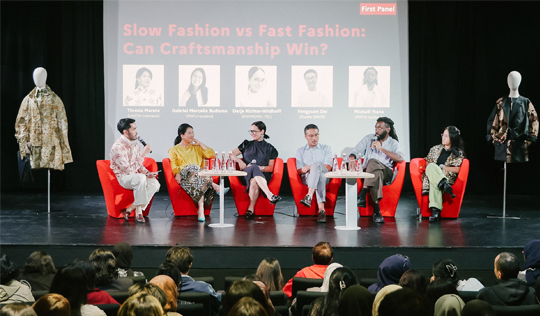
Its continued relevance, they suggested, depends on its ability to respond to changing creative, social, and commercial realities. The discussion also touched on knowledge gaps, policy support, and the balance between creative integrity and commercial viability, highlighting commercial awareness and entrepreneurship alongside technical expertise.
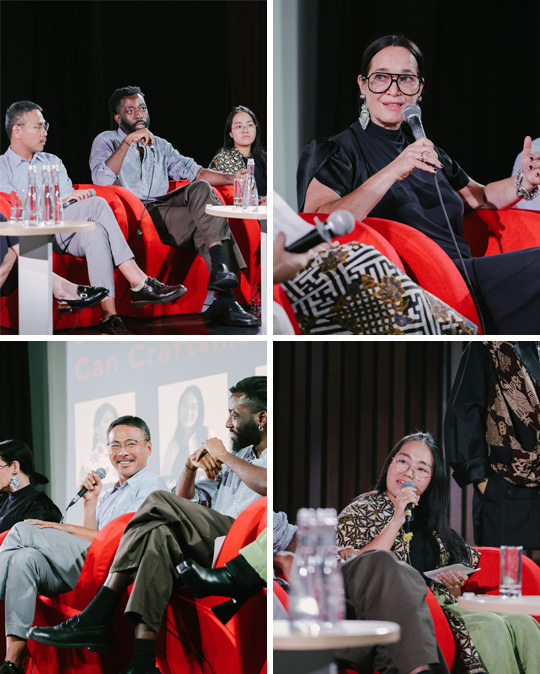
The value of learning beyond formal education also came into focus, with industry experience, collaboration, and hands-on practice seen as important in preparing the next generation of designers. Ultimately, craftsmanship emerged as more than a nostalgic practice or commercial commodity: its strength lies in carrying cultural identity forward while adapting to a changing fashion industry.
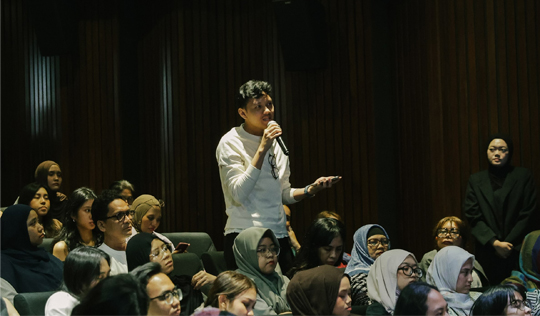
Textile Innovation: Bio-Based Fibres, Recycling Technologies, Smart Textiles
The second panel, also moderated by Dino Augusto, featured Pascaline Wilhelm (Director, ENAMOMA-PSL), Mathieu Buard (Curator and Professor, École Duperré Paris), Alia Sarastita (Co-founder and CEO, The New Factory), and Prof. Mohamad Widodo (Professor of Functional Textiles, Politeknik STTT Bandung).
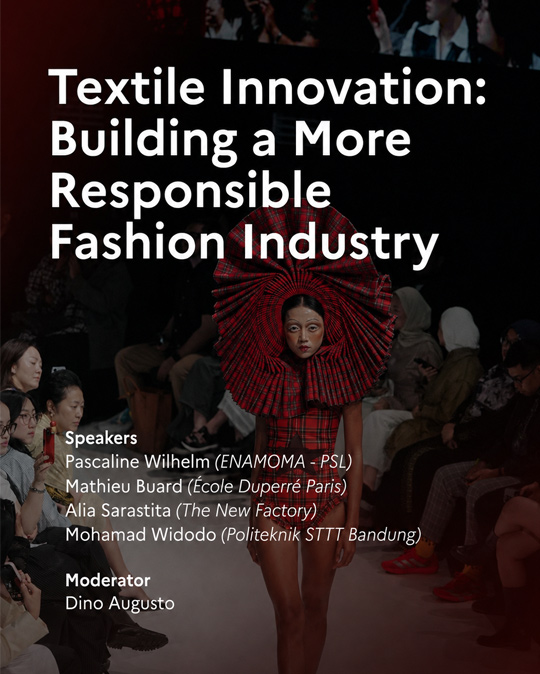
Shifting the focus towards innovation, the session explored bio-based fibres, recycling technologies, and smart textiles, while considering how new materials can contribute to wider change within fashion.
A recurring topic was the paradox of contemporary consumption. While consumers increasingly look for products that are durable and responsibly made, the industry’s pursuit of novelty continues to drive overconsumption and waste. The panel encouraged a greater focus on longevity, emotional connection, and extending a product’s life cycle beyond the point of purchase.
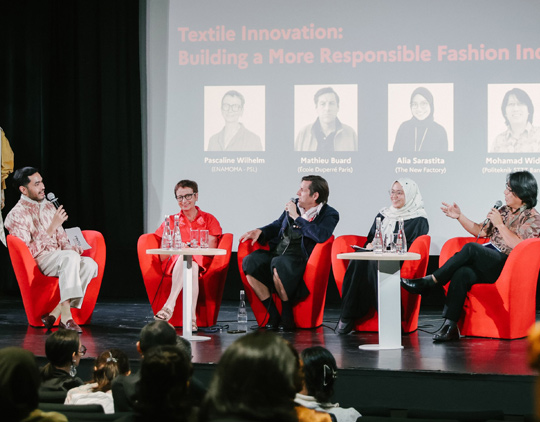
Innovation, however, goes beyond materials. Responsible sourcing, ethical production, transparency, circular design, and social impact were all part of the conversation, alongside repair, reuse, and recycling as ways to extend the life of fashion products. The session also highlighted the need for collaboration among designers, researchers, manufacturers, educators, policymakers, and businesses to turn new ideas into lasting change.
Together, the two discussions reflected the spirit of Rethinking the Fashion of Tomorrow, bringing craftsmanship and innovation into the same conversation rather than treating them as separate paths.
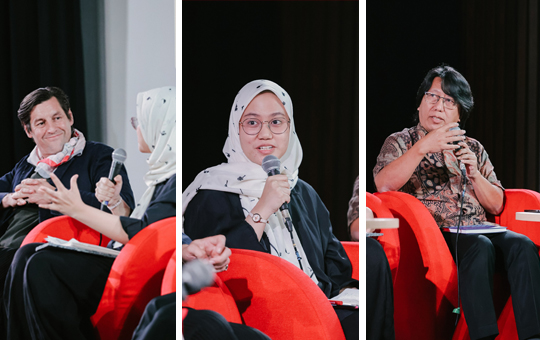
By bringing together perspectives from Indonesia and France, PINTU Seminar 2026 offered a space to consider how knowledge exchange and collaboration can contribute to a more responsible and forward-looking fashion industry.
 1.02K
22/10/2026
1.02K
22/10/2026
DRAFT IFDC TURNS FASHION INTO PURPOSE, RAISING RP208.7 MILLION FOR FLORES
FASHION WITH PURPOSE — A pop-up store featuring 22 IFDC designers raised Rp208.7 million to support communities in Flores, with the proceeds officially...
read more 6.65K
22/10/2026
6.65K
22/10/2026
GHIDINI1961 EXPANDS ITS DESIGN DIALOGUE WITH NEW PRODUCTS AND COLLABORATIONS 2026
Ghidini1961's latest collection brings together new furniture and a collaboration with Spotti Milano, celebrating contemporary craftsmanship through...
read more

 13.18K
24/09/2026
13.18K
24/09/2026
LOUIS VUITTON X SINGER TAKES TO THE ROAD: WHEN THE ART OF TRAVEL BECOMES A PORSCHE 911
Louis Vuitton and Singer Vehicle Design turn two Porsche 911s into moving expressions of craftsmanship, travel and contemporary luxury.
read more 12.90K
24/09/2026
12.90K
24/09/2026
WITTMANN: THE ART OF SLEEP
Wittmann’s The Art of Sleep brings artisanal craft, bespoke design and personalised comfort together to create a private sanctuary, where every detail...
read more

 186.80K
11/12/2024
186.80K
11/12/2024
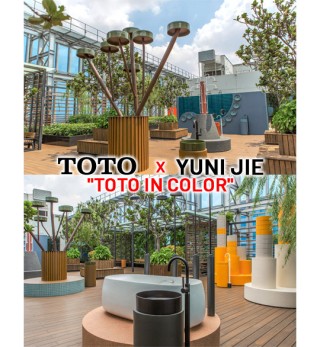
TOTO X YUNI JIE: "TOTO in Color"
TOTO x Yuni Jie launches 'TOTO in Color', featuring an outdoor art installation and a sculpture garden inspired by Indonesia's heritage.
read more 107.33K
10/01/2025
107.33K
10/01/2025
W RESIDENCE IN SOUTH JAKARTA BY MICHAEL CHANDRA
Michael Chandra, founder of MNCO Studio Design has created the W Residence with an aesthetically pleasing, practical, and pleasant home from all...
read more



Related Articles
 1.02K
22/10/2026
1.02K
22/10/2026
DRAFT IFDC TURNS FASHION INTO PURPOSE, RAISING RP208.7 MILLION FOR FLORES
FASHION WITH PURPOSE — A pop-up store featuring 22 IFDC designers raised Rp208.7 million to support communities in Flores, with the proceeds officially...
read more 1.69K
20/10/2026
1.69K
20/10/2026
STARBUCKS FOUNDATION DUKUNG ORGANISASI PEMBERDAYAAN MASYAKARAT DI INDONESIA
Starbucks Foundation mendukung tiga organisasi lokal di Indonesia dengan menghibahkan dana sebesar US$50.000 untuk pemberdayaan masyarakat yang relevan...
read more