
MOROSO AND ZANELLATO/BORTOTTO AND THE TRANSFORMATIVE POWER OF FIRE


Published by Sugar & Cream, Monday 10 August 2026
Images Courtesy of Moroso
When Craftsmanship Meets Italian Cultural Heritage
Some materials carry more than colour, texture, or form. They carry traces of heat, handwork, and the subtle unpredictability of making. This idea sits at the heart of the collaboration between Italian furniture brand Moroso and design duo Zanellato/Bortotto, brought to life across two significant cultural settings: the Quirinal Palace and Villa Medici.
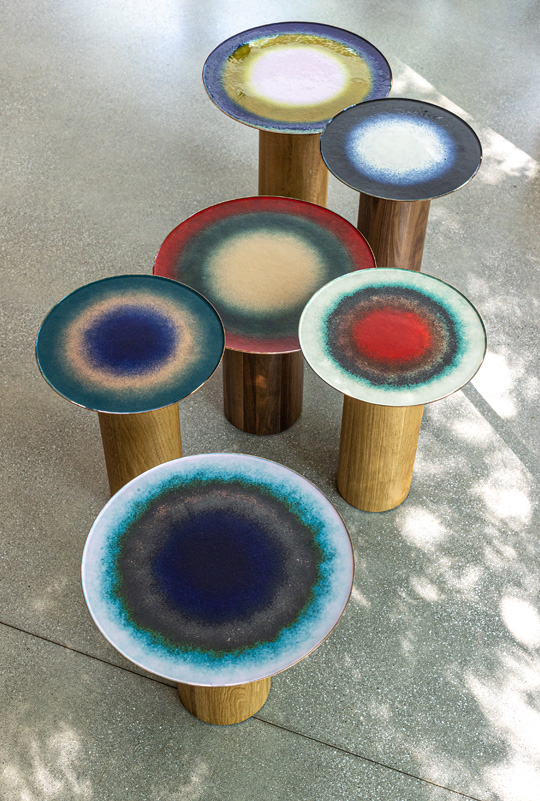
Mangiafuoco
Connecting the two projects is a shared exploration of materials, transformation, and craftsmanship. Here, fire becomes more than a production process—it shapes surfaces, introduces variation, and gives each object a character of its own.
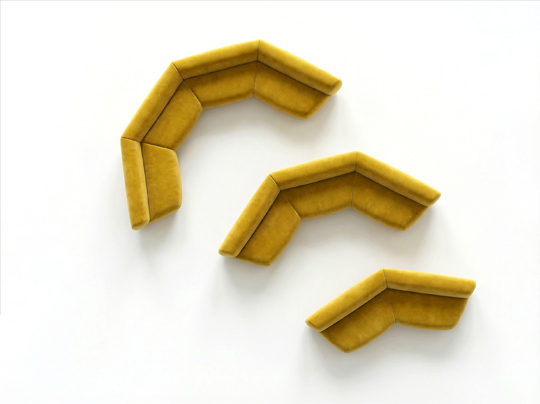
Clay
At the Quirinal Palace, the Mangiafuoco tables, designed by Zanellato/Bortotto for Moroso in 2024, have joined the permanent Quirinale Contemporaneo itinerary, bringing contemporary Italian design into dialogue with the historic interiors.
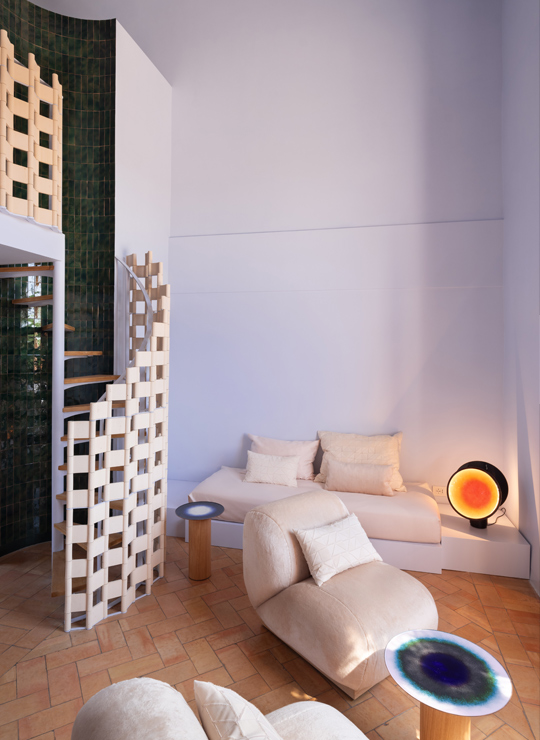
Each circular top begins as a sheet of copper alloy, hand-coated with vitreous powders and metal oxides before being fired at high temperatures. The process permanently fuses the materials, creating deep, vibrant surfaces that differ from one piece to another. Set on cylindrical solid-wood bases, the tables evoke celestial bodies, with every surface carrying the imprint of its transformation.
Presented by Magran Living
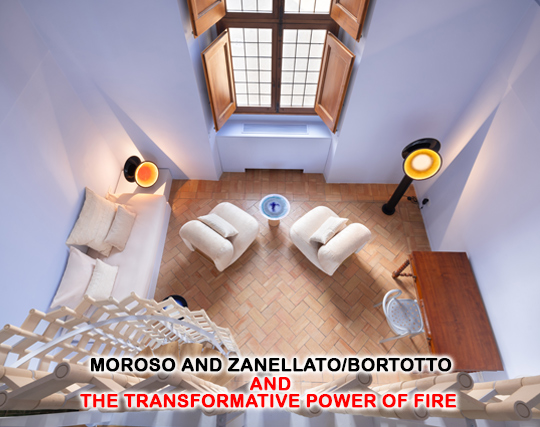
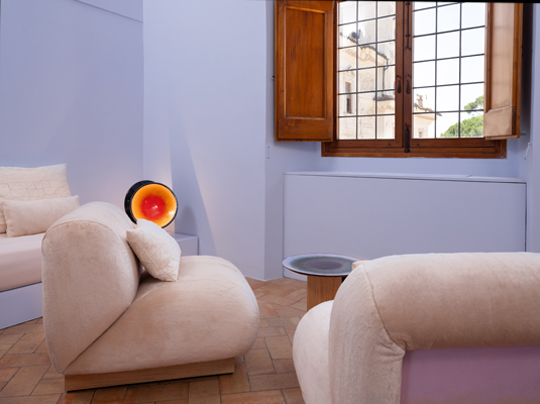
At Villa Medici, the same material research takes a more immersive direction. For Il cielo in una stanza, the interior design of Room 20 created as part of the Re-enchanting Villa Medici programme, Zanellato/Bortotto draws inspiration from verdant pine trees and Roman travertine. Wisteria-blue walls and a striking green feature wall create a setting where architecture, nature, and design meet.
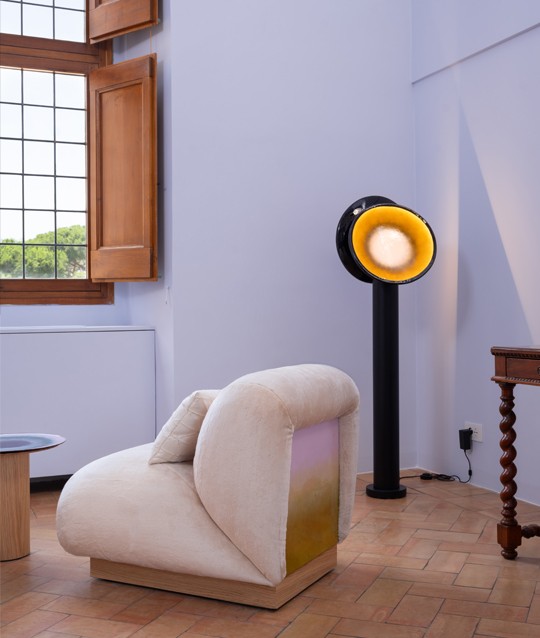
The room also features two unique prototypes of the Clay armchair, developed especially for Villa Medici in collaboration with Moroso and Incalmi. Rather than the ceramic backrest of the later production version, these prototypes feature fired enamel panels on copper, continuing the material exploration behind Mangiafuoco.
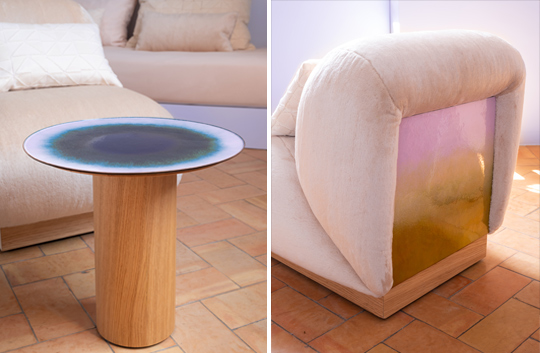
From the Quirinal Palace to Villa Medici, the projects reveal a contemporary approach to Italian design in which craftsmanship is not treated as a static tradition, but as a living practice open to experimentation. Fire becomes the invisible thread connecting them—a design tool that allows material, process, and the human hand to shape objects with their own distinct identity.
 1.74K
09/10/2026
1.74K
09/10/2026
SEJAUH MATA MEMANDANG: A HOME FOR THE JOURNEY
Toko Sejauh opens its doors at Plaza Indonesia—Sejauh Mata Memandang’s first permanent boutique and a new chapter for Indonesian conscious fashion.
read more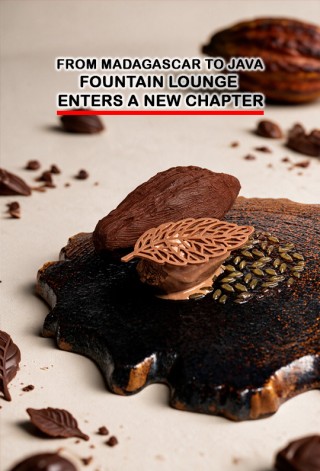 5.32K
09/10/2026
5.32K
09/10/2026
FROM MADAGASCAR TO JAVA: FOUNTAIN LOUNGE ENTERS A NEW CHAPTER
A new chapter at The Fountain Lounge, Grand Hyatt Jakarta where premium teas meet contemporary patisserie and the rich intensity of Guanaja.
read more

 13.07K
24/09/2026
13.07K
24/09/2026
LOUIS VUITTON X SINGER TAKES TO THE ROAD: WHEN THE ART OF TRAVEL BECOMES A PORSCHE 911
Louis Vuitton and Singer Vehicle Design turn two Porsche 911s into moving expressions of craftsmanship, travel and contemporary luxury.
read more 12.82K
24/09/2026
12.82K
24/09/2026
WITTMANN: THE ART OF SLEEP
Wittmann’s The Art of Sleep brings artisanal craft, bespoke design and personalised comfort together to create a private sanctuary, where every detail...
read more

 177.13K
11/12/2024
177.13K
11/12/2024
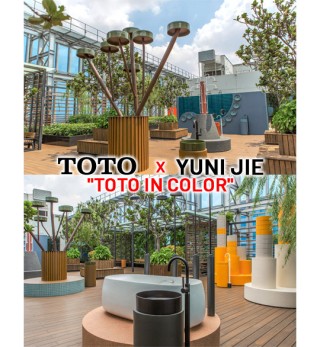
TOTO X YUNI JIE: "TOTO in Color"
TOTO x Yuni Jie launches 'TOTO in Color', featuring an outdoor art installation and a sculpture garden inspired by Indonesia's heritage.
read more 107.24K
10/01/2025
107.24K
10/01/2025
W RESIDENCE IN SOUTH JAKARTA BY MICHAEL CHANDRA
Michael Chandra, founder of MNCO Studio Design has created the W Residence with an aesthetically pleasing, practical, and pleasant home from all...
read more


Related Articles
 2.94K
08/10/2026
2.94K
08/10/2026
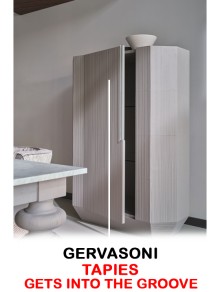
GERVASONI TAPIES GETS INTO THE GROOVE
Gervasoni’s Tapies gives clean-lined cabinets a more expressive edge through tactile concrete, rhythmic detailing and a playful approach to surface.
read more 1.97K
07/10/2026
1.97K
07/10/2026
NAGANO INTERIOR BRINGS THE QUIET BEAUTY OF JAPANESE CRAFTSMANSHIP TO SALONE DEL MOBILE.MILANO 2026
At Salone del Mobile.Milano 2026, Nagano Interior brings a quiet expression of Japanese craftsmanship through refined comfort and the philosophy of Wa.
read more