
AGAPE AND AGAPECASA RETURN TO 3DAYSOFDESIGN WITH ARTISTIC POSITION IN SPACE


Published by Sugar & Cream, Monday 09 November 2026
Images courtesy of Agape & Agapecasa
Architecture, Art, and the Art of Living
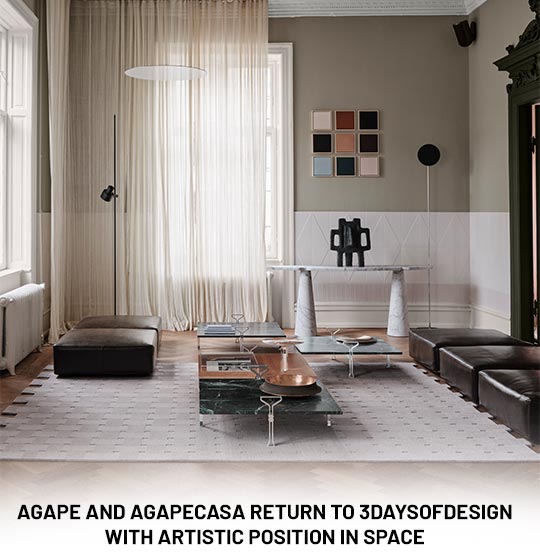
What happens when a historic house becomes the starting point for a contemporary domestic landscape? At File Under Pop Studio in Copenhagen, Agape and Agapecasa return to 3daysofdesign with Artistic Position in Space, an installation that brings architecture, furniture, art, materials, and everyday rituals into one carefully composed setting.
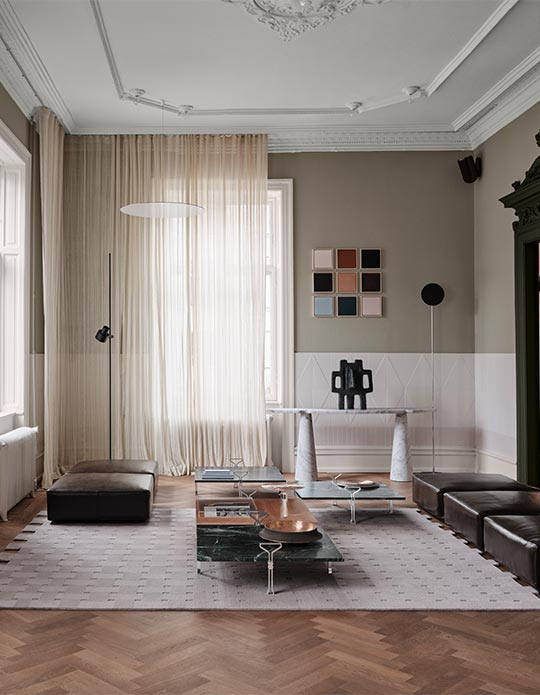
Created in partnership with File Under Pop and presented alongside V–ZUG, Davide Groppi, and Garde Hvalsøe, the installation explores the idea of Artful Living—a way of inhabiting space where objects, surfaces, artworks, light, and materials are considered as part of the same composition. Rather than treating furniture as isolated pieces, the project considers how each element occupies a position, responds to its surroundings, and contributes to the atmosphere of a room.
At the heart of the installation is Villa Schwob, Le Corbusier’s landmark work in La Chaux-de-Fonds, Switzerland. Built between 1916 and 1917 for entrepreneur Anatole Schwob, the villa marked the final major work of Le Corbusier’s Swiss period, while pointing toward the geometric abstraction and architectural experimentation that would shape his later work.
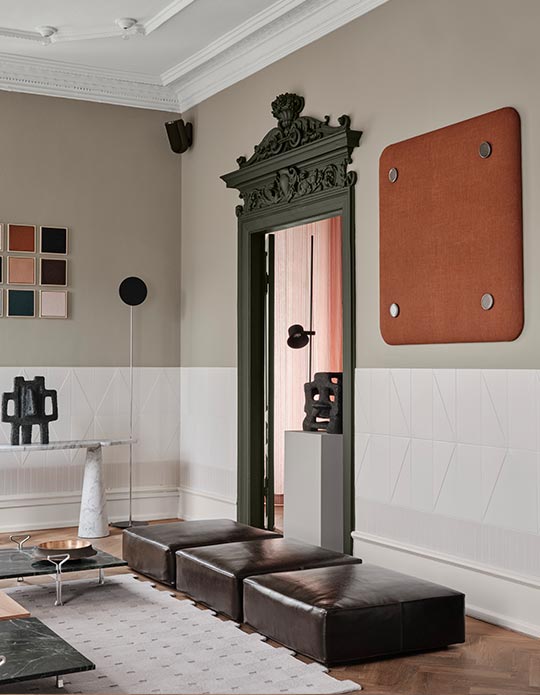
The connection to Agapecasa runs deeper than an architectural reference. In the 1950s, Angelo Mangiarotti and Bruno Morassutti were invited to reinterpret the villa’s interiors, designing furniture specifically for its context. For Copenhagen, that relationship becomes the foundation of a new interior inspired by the villa’s double-height hall, monumental window, open visual axis, and low conversational setting.
The Schwob Table sits at the centre of this story. Originally produced in only a handful of examples for Villa Schwob, the table remained outside industrial production, known primarily through photographs, drawings, and period documentation. Agapecasa now brings it back through a philological re-edition faithful to its original proportions, workmanship, and constructive intent.
Presented by Interni Cipta Selaras
Designed by Angelo Mangiarotti and Bruno Morassutti in 1959, the Schwob Table was conceived for the same double-height hall. Its low geometry maintains the openness of the room, while its integrated side handles turn a functional detail into a distinctive structural gesture. For Artistic Position in Space, the table makes its Northern European debut in several stone variations and okumè plywood, reinforcing the installation’s connection between architecture, material, and domestic life.
Around it, Agapecasa presents a wider selection of Mangiarotti’s work, including Eros tables in different sizes, Club 44 and Tre 3 chairs, and new configurations of the Cavalletto system. The furniture is accompanied by limited-edition bronze CAP53 vases, displayed within the Cavalletto structures, turning the furniture itself into part of the exhibition setting.
The CAP53 vases introduce another layer to the material story. Created using the ancient lost-wax casting technique, their forms originate from the movement of two circles of different diameters along vertical axes, generating a series of sculptural variations. Here, the boundary between functional object and sculpture becomes deliberately blurred.
That same exchange between disciplines comes through in the work of Sonja Ferlov Mancoba, whose sculptures bring an additional sense of physicality and presence to the installation. Her words offer a fitting lens through which to view the project: “Only through each other can we live and breathe — no one creates alone.” In Copenhagen, that idea becomes tangible as furniture, sculpture, architecture, and material come together without losing their individual identities.
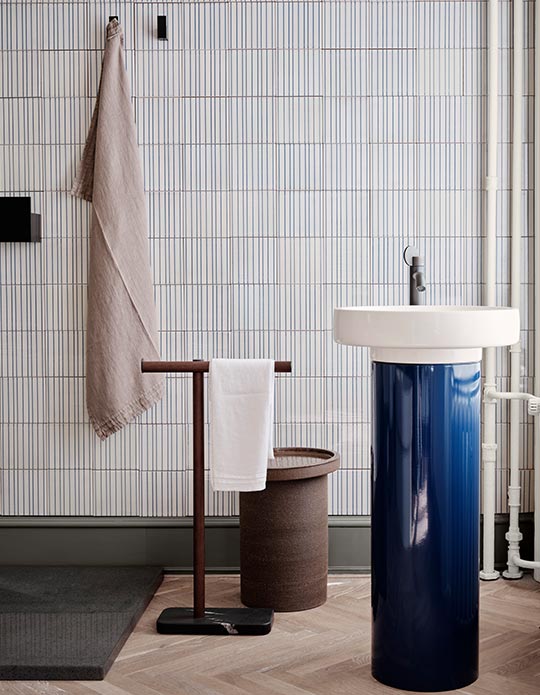
Agape extends the same approach into the bathroom. Freestanding Lariana and Massicci washbasins are positioned almost as sculptural objects, considered alongside the surrounding furniture and artworks through their proportions, materials, and spatial relationships. The familiar ritual of water consequently becomes part of the wider interior rather than a separate functional zone.
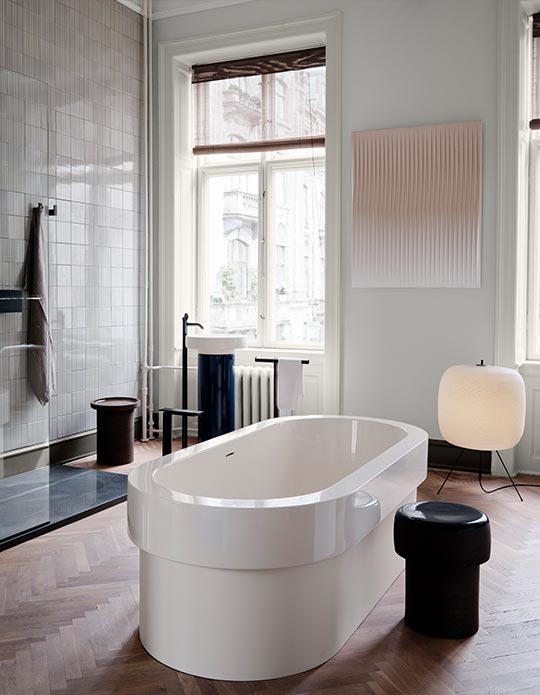
Another setting brings together the Bloque system, Cenote bathtub, and Cenote washbasin. Presented in a gel-coated solid-surface finish with a colour developed specifically for the installation, the Cenote bathtub anchors the setting through its volume and material presence. Alongside it, the Cenote washbasin continues the collection’s sculptural language, while Bloque provides an architectural framework for storage, surfaces, and display.
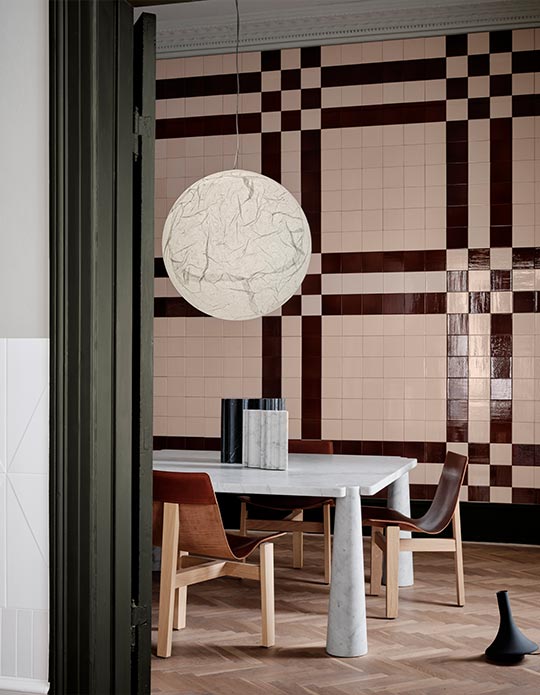
Together, these elements suggest a different way of looking at the home: not as a collection of separate rooms and functions, but as a continuous landscape where art, furniture, architecture, and everyday rituals can exist within the same visual field.
At Artistic Position in Space, the result is less about presenting individual pieces and more about showing what happens between them. Inspired by Villa Schwob and shaped by the distinct contributions of Agape, Agapecasa, File Under Pop, and the participating studios, the installation turns 3daysofdesign into a study of proportion, material, and relationships—an environment in which every object has a place, and every place becomes part of the story.
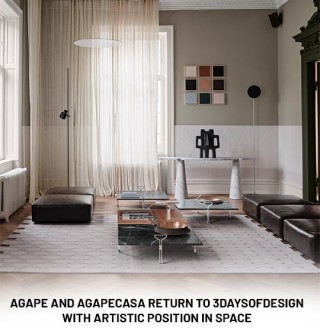 80
09/11/2026
AGAPE AND AGAPECASA RETURN TO 3DAYSOFDESIGN WITH ARTISTIC POSITION IN SPACE
At 3daysofdesign, Agape and Agapecasa join File Under Pop for Artistic Position in Space, inspired by Villa Schwob and bringing art, architecture,...
read more 1.19K
06/11/2026
DIEFFEBI FINDS THE SWEET SPOT BETWEEN GEOMETRY AND COMFORT
In Chapter 3 of Home Office Scenarios, Dieffebi explores the balance between modular geometry, adaptable design, and the warmth of everyday living.
read more
 11.43K
20/10/2026
PAOLA LENTI PRESENTS “DIALOGHI” AT MILANO DESIGN WEEK 2026
At Milano Design Week 2026, Paola Lenti’s Dialoghi explores a continuous dialogue between colour, material, and space.
read more 10.66K
16/10/2026
BEL ÉTAGE AT THE ST. REGIS JAKARTA: A WEEKEND OF EXTRAORDINARY INDULGENCE
Bel Étage at The St. Regis Jakarta unveils a new chapter of its signature brunch, pairing a redesigned carving station with interactive tableside...
read more
 199.01K
11/12/2024
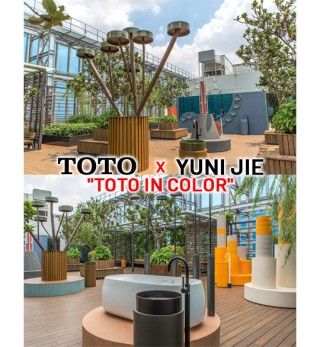
TOTO X YUNI JIE: "TOTO in Color"
TOTO x Yuni Jie launches 'TOTO in Color', featuring an outdoor art installation and a sculpture garden inspired by Indonesia's heritage.
read more 107.49K
10/01/2025
W RESIDENCE IN SOUTH JAKARTA BY MICHAEL CHANDRA
Michael Chandra, founder of MNCO Studio Design has created the W Residence with an aesthetically pleasing, practical, and pleasant home from all...
read more

Related Articles
 1.64K
04/11/2026
“WILL YOU STILL LOVE ME TOMORROW? — A LIVING ARCHIVE” MARKS THE PAPILION’S 20TH ANNIVERSARY
The Papilion celebrates 20 years with Will You Still Love Me Tomorrow? — A Living Archive, a tribute to fashion, memories, and personal stories.
read more 1.22K
02/11/2026
WAVES OF WEAVE: SOUTHEAST ASIAN TEXTILE HERITAGE AND THE LEGACY OF GUSTI NURUL
Discover Waves of Weave at the National Museum, Jakarta, where the textile traditions of 10 Southeast Asian nations meet the remarkable personal...
read more