
GUBI BRINGS A RARELY SEEN DESIGN INTO THE LIGHT


Published by Sugar & Cream, Monday 26 October 2026
Images courtesy of GUBI
Silk Lantern by Ejner Larsen & Aksel Bender Madsen
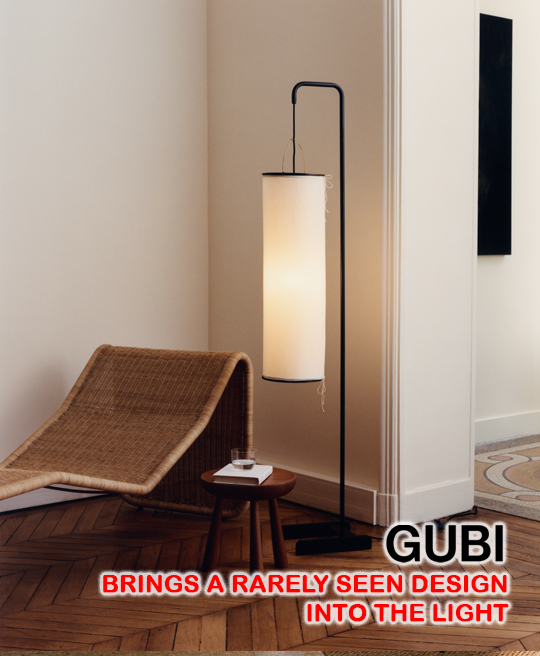
Some designs reveal their character through the quiet interplay of materials, proportions, and light. The Silk Lantern by Ejner Larsen and Aksel Bender Madsen embodies this sensibility, combining natural silk, warm walnut, and lacquered steel in a considered study of light and structure. Designed in 1951 and presented at the Cabinetmakers’ Guild Exhibition, the lamp never entered production until GUBI brought it to life for contemporary interiors.
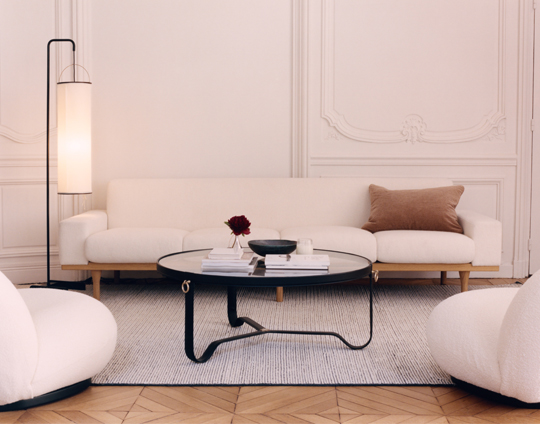
Although Larsen and Bender Madsen are best known for their furniture, the Silk Lantern reveals another dimension of their design philosophy. Inspired by traditional Japanese lanterns, its form balances the atmospheric quality of Japanese aesthetics with the clarity and restraint of Danish modernism. Lighting becomes more than a functional element, shaping the mood and rhythm of a space through carefully considered proportions and materials.
“For us, there is a quiet poetry to the Silk Lantern – in the silk, the proportions, and the way the light becomes part of the room. Because the design never entered production, seeing it brought to life today is deeply meaningful,” says Louise Hopkinson, granddaughter of Aksel Bender Madsen.
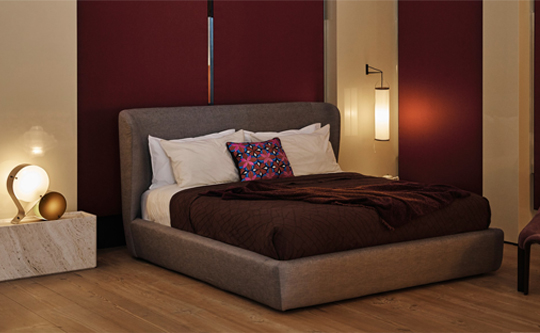
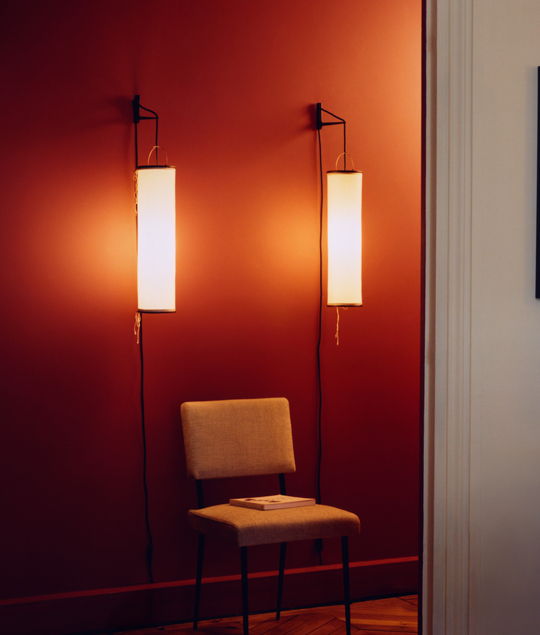
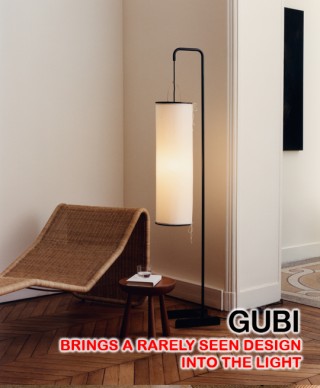
At the heart of the design is a cylindrical shade made from 100% natural mulberry silk. Its subtle surface variations lend the fabric an organic character, while the light passing through it creates a gentle interplay of brightness and shadow. Two FSC®-certified walnut veneer rings frame the shade, adding warmth and definition, while the lacquered steel structure provides an architectural counterpoint. In the floor lamp, this balance is particularly apparent, as the delicate shade meets the grounded presence of the steel base.
This interplay reflects the designers’ approach to simplicity, where the relationship between form, function, and human experience takes precedence over ornament. The Silk Lantern finds its character in the contrast between soft textiles, natural wood, and the precision of metal.
Presented by Coulisse | INK
“Our fathers were drawn to soft, intimate light and to the quiet beauty of Japanese aesthetics. The Silk Lantern captures both: a simple form with a very human warmth, created to bring atmosphere through light,” says Niels Ejner Larsen, son of Ejner Larsen.
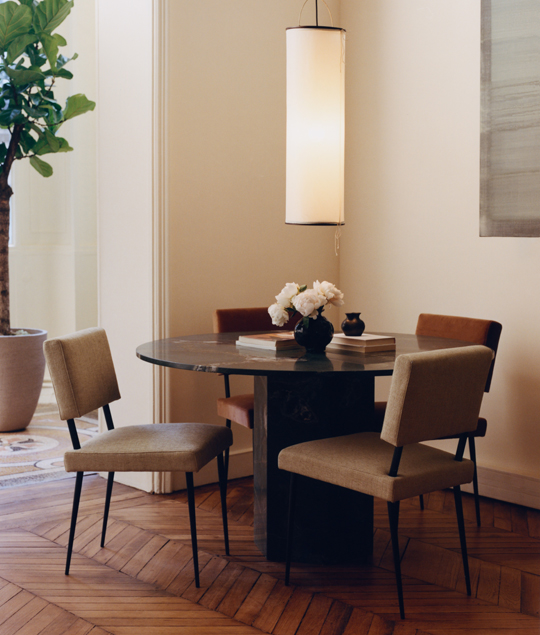
Conceived as a lighting family, the Silk Lantern comes in floor, pendant, and wall versions, each adapting the signature cylindrical shade to a different scale and setting. Adjustable shade heights offer flexibility, while the lamps can be used individually as understated accents or arranged together to establish a harmonious rhythm throughout an interior.
“The Silk Lantern expands how we understand Ejner Larsen and Aksel Bender Madsen’s legacy. It shows their ability to think beyond the object itself – considering how light, scale, and placement shape the experience of an interior,” says Marie Kristine Schmidt, CEO of GUBI
Bringing the Silk Lantern into production for the first time, GUBI offers a fresh perspective on the legacy of two designers whose work extends beyond furniture. Available from early October 2026, the lamp brings a previously unrealised chapter of Danish modernism into contemporary interiors, where silk, walnut, and steel come together to turn light into an experience.
 106
26/10/2026
GUBI BRINGS A RARELY SEEN DESIGN INTO THE LIGHT
Designed in 1951, GUBI’s Silk Lantern brings Danish modernism and Japanese-inspired lightness into contemporary interiors.
read more 90
26/10/2026
ALTITUDE GRILL X PLAZA INDONESIA: “SILK ROAD CULINARY EXPERIENCE” FROM 20 OCT – 31 DECEMBER
Three acclaimed chefs, three distinctive interpretations, one legendary journey of flavours, Plaza Indonesia x Altitude Grill invites you to discover the...
read more

 11.31K
20/10/2026
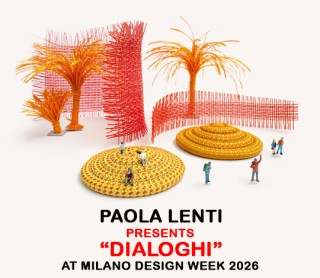
PAOLA LENTI PRESENTS “DIALOGHI” AT MILANO DESIGN WEEK 2026
At Milano Design Week 2026, Paola Lenti’s Dialoghi explores a continuous dialogue between colour, material, and space.
read more 11.12K
29/09/2026
KETTAL LONDON: WHERE FURNITURE MEETS ARCHITECTURE
Kettal’s new London flagship unfolds as a living dialogue between Eames, architecture and contemporary design.
read more

 189.11K
11/12/2024
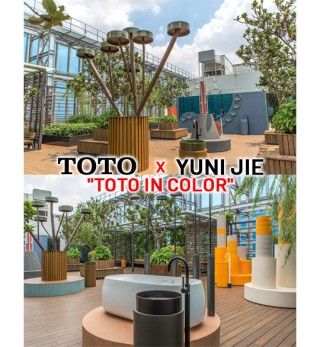
TOTO X YUNI JIE: "TOTO in Color"
TOTO x Yuni Jie launches 'TOTO in Color', featuring an outdoor art installation and a sculpture garden inspired by Indonesia's heritage.
read more 107.36K
10/01/2025
W RESIDENCE IN SOUTH JAKARTA BY MICHAEL CHANDRA
Michael Chandra, founder of MNCO Studio Design has created the W Residence with an aesthetically pleasing, practical, and pleasant home from all...
read more

Related Articles
 5.02K
20/10/2026
BUCCELLATI’S SILVERWARE TAKES A PLAYFUL TWIST
Buccellati’s celebrated silverware collections meet nature in a playful visual narrative, revealing a timeless approach to Art de la Table.
read more 4.72K
19/10/2026
GUGLIELMI INTRODUCES NOVO INOX, A TIMELESS 316L STAINLESS STEEL KITCHEN COLLECTION
Novo Inox reimagines the contemporary kitchen through Guglielmi Rubinetterie's refined collection of 316L stainless steel faucets.
read more