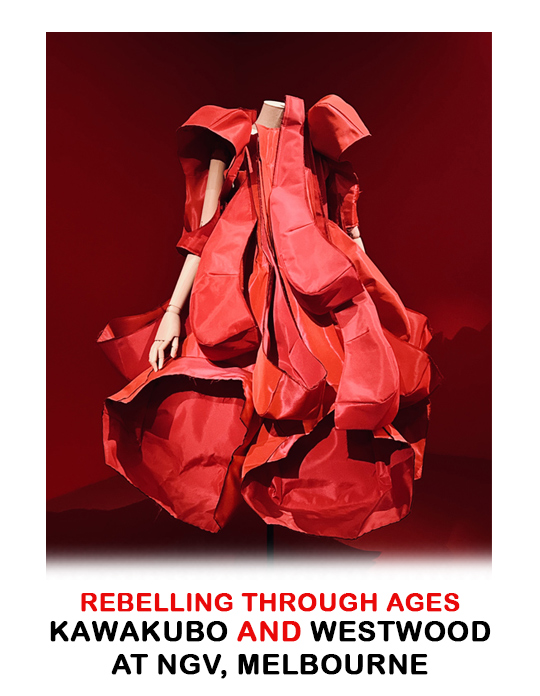

REBELLING THROUGH AGES: KAWAKUBO AND WESTWOOD AT NGV, MELBOURNE


Published by Sugar & Cream, Thursday 19 March 2026
Images courtesy of Lynda Ibrahim
Breaking Boundaries, Challenging Conventions, Rebelling Relentlessly
In its long history, fashion is often a form of rebellion or aspiration. European royal ladies in Middle Ages were expected to look demure, so Marie Antoinette chose to dress flamboyantly. Coco Chanel lived with strict nuns as an impoverished child, so she designed corset-free clothing that looked luxurious. Madonna paired cross necklace with sexy bustier to rebel against the religion she was raised in.
Many fashion designers have come onto the runway displaying their rebellion throughout the decades. Two of the most celebrated ones, Rei Kawakubo and Vivienne Westwood, are now feted at National Gallery of Victoria (NGV) International in the heart of Melbourne, Australia.
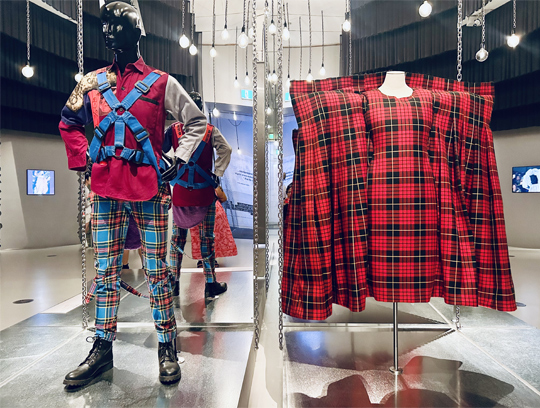
The sizable exhibition opens with a pair of ensembles in vibrant tartans, each designed by Kawakubo and Westwood. The 4-decade life stories and historical works of both designers are smartly arranged in a few galleries so visitors can see the unifying narrative while still learning about each designer’s profile. Between galleries full of fashionable frocks, passageways are filled with timeline, related memorabilia and quotes from both designers. Different-sized screens playing memorable runway shows dot the exhibition throughout, offering different sensation to visitors.
Let’s have a closer look at each designer.
REI KAWAKUBO
Born from an educated, Tokyo-based family in October 1942, Kawakubo graduated from Keio University with a degree in fine art and aesthetics. After graduating in 1964, Kawakubo worked in textile industry and as a freelance stylist before starting to design.
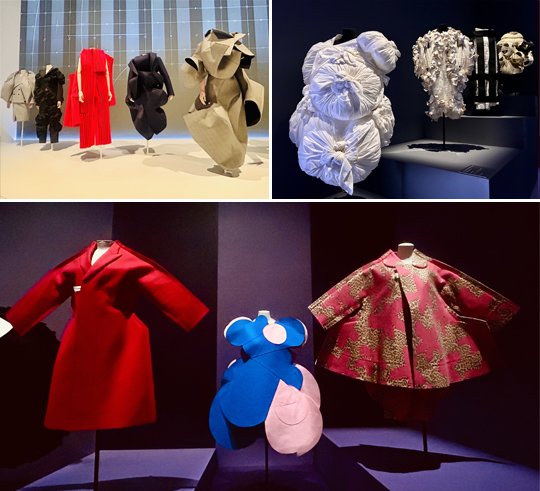
Founding Comme des Garcons (“like the boys’ in French) in 1969, Kawakubo was determined to create clothes that had not existed. She didn’t care much about what conventions dictated and instead set out to craft her own world. Her unique visions materialized through subversion of garment shapes, reframed ideas of beauty and usage of creative materials.
Debuting in Paris in 1981 with a collection named Pirates that she later showed in London, Kawakubo went to fill the 1980s with distressed black fabrics and asymmetrical forms that by then were a novelty, in visual and vocabulary, to the fashion world. She quickly gained reputation as a conceptual designer, the one who prefers to speak through her clothes than to reporters. Her 1996 collection titled Body Meets Dress-Dress Meets Body distorted silhouettes, erasing boundary between the wardrobe and the wearers.
Focusing on her signature design language, through the decades Kawakubo explored sculptural forms, experimented with patterns, and easily moved between discarded items to Perspex for materials. Starting in 2014 onwards, Kawakubo designs solely for runway presentations and private orders, signaling her priorities for personal quest over commercial pursuit. Even when honored as the theme for Met Gala 2017, Kawakubo mostly let her work, instead of her words, to be captured by media lens. Among the sea of society swans strutting in her designs, she remained stoic, appearing almost detached.
VIVIENNE WESTWOOD
Born in April 1941 in an ancient small town of Hollingworth from a working-class family, Vivienne Swire had a teacher-training education and worked as a primary school teacher and factory worker while simultaneously creating jewelry. She wore a wedding dress she designed upon marrying Derek Westwood in 1962, whose last name she kept after their divorce.
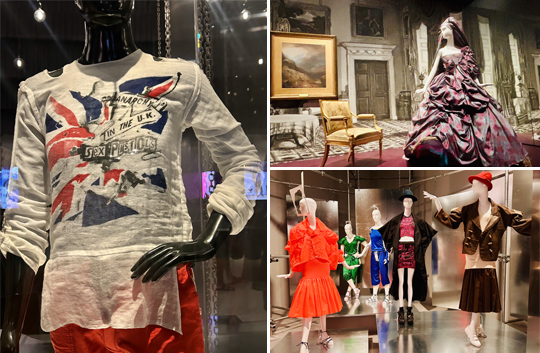
Her romantic relationship with multitalented Malcolm McLaren expanded into fashion as Westwood created what McLaren designed. After McLaren became a manager for punk band Sex Pistols, the band started wearing their designs, drawing public attention. The couple set up a shop in bustling Chelsea area of London, quickly becoming a punk scene in the 1970s. The shop often changed names, each time more provocative than before. Their son later grew up to co-found lingerie brand Agent Provocateur.
Presenting their first runway collection Pirate in London in 1981, the same year Kawakubo presented a similarly named collection in Paris, the collection was a fruit of Westwood’s research on 17th and 18 century menswear, marking the direction she’d often take in the future.
Presented by Interni Cipta Selaras
Of many norm-challenged works they did, the 1983 collaboration with American visual artist Keith Harring warranted a nod. Harring’s graffiti is globally celebrated now, but in those days was yet to be widely accepted. The couple incorporated Harring’s fluorescent symbols of social-political messages into the Witches collection and turned the runway show into an engaging multimedia experience, reaping new clients and fans from American hiphop community.
Westwood didn’t waver after her marriage to McLaren also ended. The 1987-88 collection cemented her penchant for Scottish tweed while simultaneously launching the Orb symbol, the latter sparked fury for its resemblance to the monarchy’s Sovereign Orb. Not to be deterred, Westwood cheekily dressed up as then Prime Minister Margaret Thatcher on the cover of UK Tatler magazine in April 1989. Despite these, her seminal works were recognized by the establishment; Westwood was appointed an Officer of the Order of the British Empire (OBE) in 1982 and Dame Commander in 2006 by Queen Elizabeth II.
For her 80th birthday, Westwood was commissioned by a progressive art community for a video to be screened in Piccadilly Lights, in which she put together a criticism of arms dealing and climate change. She died a year later in London before 2022 ended, reportedly still working on her last days.
WHEN KAWAKUBO AND WESTWOOD COLLIDED
Working in the same era while carrying the same zeal to challenge conventions, Kawakubo and Westwood no doubt crisscrossed their paths along the same global fashion circle. Kawakubo was known to have visited Westwood’s shop in 1974, where she was remembered kindly as a good customer.
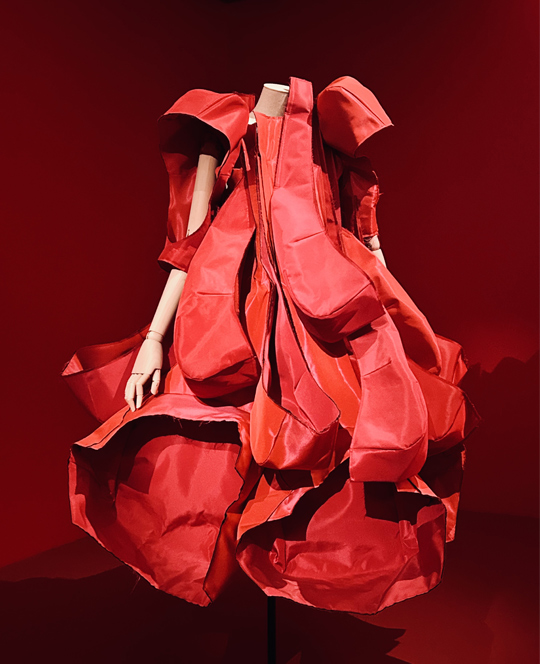
Did they ever collaborate? The answer is yes. In 2002, Kawakubo handpicked certain Westwood archival designs and remade them with Comme des Garcons fabrics, released under a shared label. This small and brief collection is described in a red-painted gallery in the middle of the exhibition.
As an exhibition, it is not only well-curated, it also successfully illustrates the parallels while casting a much-deserving individual light on each designer. In the era when “boomer” is often used as a derogatory term to picture outdated persona, these two powerhouses born into Baby Boom generation have often proven to be more progressive than their much younger peers.
Westwood | Kawakubo exhibition runs until April 2026 at NGV International, Melbourne, Australia.
 1.14K
11/04/2026
1.14K
11/04/2026
MOSCOW FASHION WEEK — HERITAGE IN MOTION ON THE GLOBAL STAGE
At Moscow Fashion Week in Moscow, heritage is reimagined as a fluid and evolving language of contemporary fashion.
read more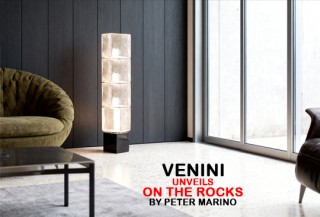 2.04K
10/04/2026
2.04K
10/04/2026
VENINI UNVEILS ON THE ROCKS BY PETER MARINO
VENINI introduces On the Rocks, a new lighting collection by renowned architect Peter Marino.
read more
 10.97K
27/03/2026
10.97K
27/03/2026
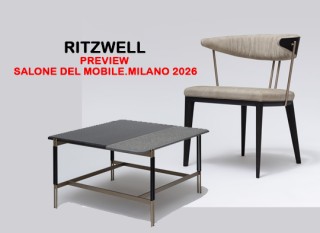
RITZWELL - PREVIEW SALONE DEL MOBILE.MILANO 2026
At Salone del Mobile.Milano 2026, Japanese furniture brand Ritzwell will unveil two key novelties: the GT table collection and the VESPER Armchair.
read more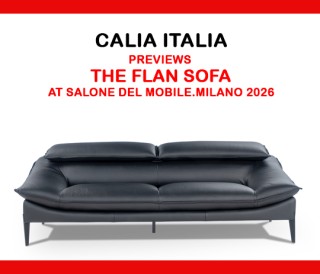 9.11K
09/04/2026
9.11K
09/04/2026
CALIA ITALIA PREVIEWS THE FLAN SOFA AT SALONE DEL MOBILE.MILANO 2026
Calia Italia presents Flan at Salone del Mobile.Milano 2026, a contemporary sofa defined by sculpted comfort and refined detailing.
read more
 102.88K
10/01/2025
102.88K
10/01/2025
W RESIDENCE IN SOUTH JAKARTA BY MICHAEL CHANDRA
Michael Chandra, founder of MNCO Studio Design has created the W Residence with an aesthetically pleasing, practical, and pleasant home from all...
read more 44.96K
11/07/2025
44.96K
11/07/2025
PELUNCURAN PERDANA LEGANO HOME MENGGANDENG AGAM RIADI DI ST REGIS RESIDENCE JAKARTA
Peluncuran perdana LEGANO HOME menggandeng Agam Riadi di St. Regis Residence Jakarta: menyatukan kemewahan dan jiwa dalam sebuah ruang.
read more



Related Articles
 1.27K
09/04/2026
1.27K
09/04/2026
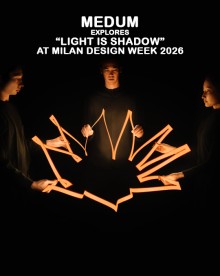
MEDUM EXPLORES “LIGHT IS SHADOW” AT MILAN DESIGN WEEK 2026
At Milan Design Week 2026, MEDUM presents Light is Shadow, an installation inviting visitors to rediscover the delicate balance between illumination,...
read more 2.17K
08/04/2026
2.17K
08/04/2026
MASTERLY – THE DUTCH IN MILANO CELEBRATES ITS 10TH EDITION AT MILANO DESIGN WEEK 2026
Celebrating its 10th edition, Masterly – The Dutch in Milano returns to Palazzo Giureconsulti during Milano Design Week 2026.
read more